
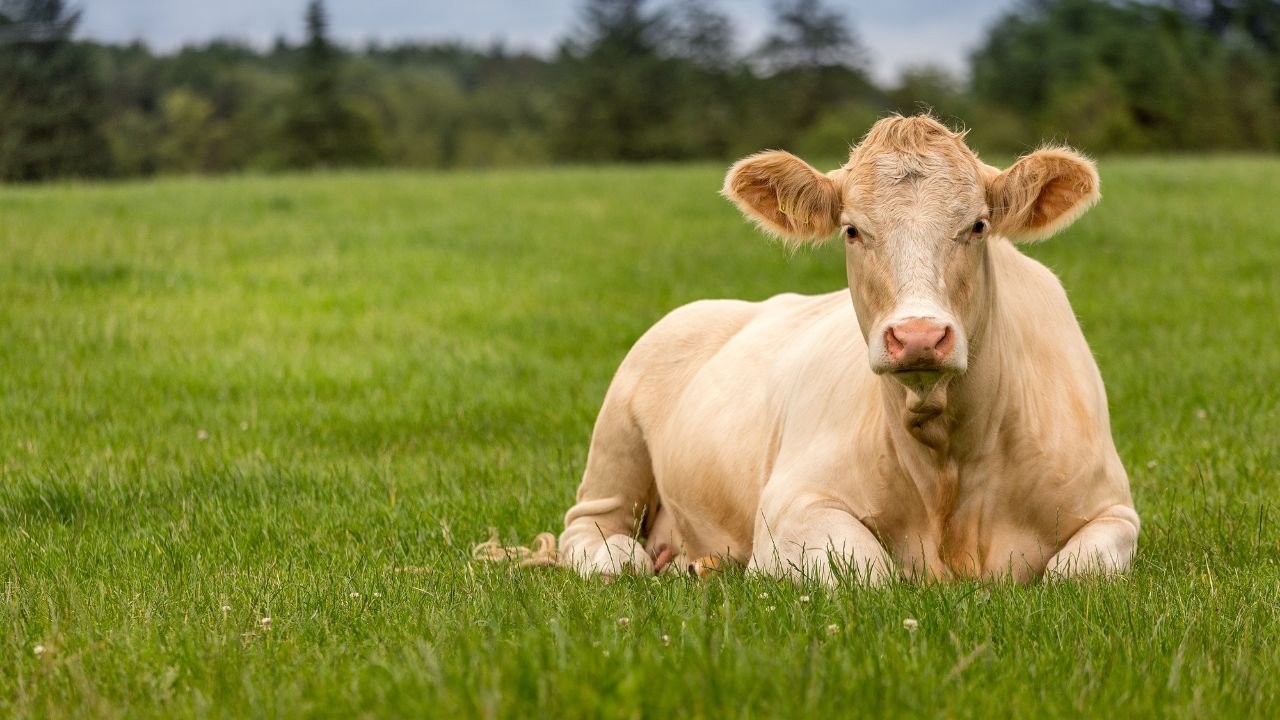
More than a century ago, a small group of cattle was abandoned on a remote island in the Atlantic Ocean. There were no farmers, no shelters, no veterinary care, and no human intervention afterward. The animals were simply left behind and forced to survive completely on their own.
Most experts assumed the isolated herd would eventually disappear or suffer severe genetic decline from inbreeding. Instead, a recent genetic study revealed something researchers did not expect at all.
Stick to the Facts
Add icode.net.au as a Preferred Source on Google to see more of our stories in your search results.

After roughly 130 years of isolation, the cattle developed into one of the most genetically unique bovine populations ever studied — and their survival story is now attracting global scientific attention.
The Island That Became a Natural Experiment
The cattle lived on Amsterdam Island, a small volcanic island located in the southern Indian Ocean between Africa and Australia. The island is one of the most remote inhabited territories on Earth and is known for its harsh weather, strong winds, and isolated ecosystem.
Historical records suggest that sailors introduced a few cattle to the island in the late 19th century, likely around the 1870s. The animals were intended as a future food source for passing ships.
But after being abandoned, the herd remained completely isolated for generations.
With no predators and no human management, the cattle adapted entirely through natural survival pressures. Over time, they became a feral population living independently in a rugged environment far from civilization.
Researchers Expected Severe Inbreeding
When scientists began studying the cattle genetically, many expected to find signs of dangerous inbreeding.
Normally, small isolated populations lose genetic diversity over time. Harmful mutations can accumulate, fertility problems increase, and long-term survival becomes difficult. This phenomenon has been observed in many isolated animal populations around the world.
Because the Amsterdam Island cattle likely descended from only a small number of original animals, researchers assumed their DNA would reveal serious genetic limitations.
But the results told a very different story.
The Genetic Findings Surprised Scientists
The recent genetic analysis showed that the cattle maintained far more genetic diversity than researchers anticipated.
Instead of collapsing genetically, the herd appeared surprisingly resilient. Scientists discovered that natural selection may have helped remove harmful traits over generations while preserving stronger genetic combinations.
The cattle also developed unique adaptations linked to their harsh island environment.
Researchers found that the animals became genetically distinct from modern domestic cattle breeds, essentially forming their own isolated evolutionary branch over more than a century.
For scientists, this was unexpected because such small isolated populations rarely remain this stable for so long without human intervention.
Survival in Harsh Conditions Changed the Herd
Amsterdam Island is not an easy place for large mammals to survive.
The isolated environment exposed the cattle to rough terrain, strong ocean winds, limited shelter, and fluctuating food availability. Over generations, only animals capable of adapting successfully reproduced.
Researchers believe this intense environmental pressure shaped both the behavior and genetics of the herd.
Unlike domesticated cattle raised for agriculture, these animals survived through natural selection alone. Traits connected to resilience, efficient grazing, disease resistance, and environmental adaptability likely became increasingly important.
Scientists say the herd essentially became a real-world example of rapid adaptation in isolation.
The Cattle Became Ecologically Controversial
Although the cattle fascinated researchers genetically, they also created major environmental concerns.
Amsterdam Island contains fragile ecosystems with rare plant species and seabird habitats. Conservationists argued that the growing cattle population damaged native vegetation and disrupted ecological balance.
By the late 20th century, environmental authorities considered the herd invasive rather than beneficial.
This created a difficult debate between conservation priorities and scientific interest. Some researchers wanted to preserve the cattle because of their unique genetics, while others focused on restoring the island’s original ecosystem.
Eventually, most of the cattle population was removed during ecological restoration efforts.
Why the Study Matters Beyond One Island
The research has importance far beyond the isolated cattle themselves.
Scientists say the findings provide valuable insight into evolution, genetic survival, and adaptation in small populations. Understanding how isolated animals maintain resilience could help conservation efforts involving endangered species worldwide.
Many endangered populations today face similar genetic risks because their numbers are small and geographically restricted.
The Amsterdam Island cattle suggest that natural selection may sometimes preserve more genetic health than scientists previously expected.
This does not mean isolated populations are automatically safe. But it does challenge older assumptions about how quickly genetic collapse must occur in small groups.
A Rare Example of Unmanaged Evolution
Modern domesticated animals are usually shaped by human breeding decisions. Farmers select traits connected to milk production, meat quality, size, or temperament.
The Amsterdam Island cattle evolved under completely different conditions.
No humans selected breeding pairs. No veterinary treatments influenced survival. No artificial feeding protected weaker animals.
Everything depended on environmental survival.
For evolutionary biologists, this makes the herd extremely valuable scientifically because it provides a rare example of how domesticated animals adapt when human control disappears entirely.
Few modern populations offer such a long-term natural experiment.
Isolation Created a Genetic Time Capsule
Researchers also describe the herd as something of a genetic time capsule.
Because the cattle remained isolated for so many generations, they preserved older genetic patterns that may have disappeared in heavily modernized commercial cattle breeds.
Modern agriculture often reduces diversity by focusing on highly productive breeding lines. The Amsterdam cattle, however, evolved separately from industrial farming systems.
This makes their DNA especially interesting for scientists studying historical cattle genetics and long-term adaptation.
Some researchers believe isolated populations like these may even hold useful genetic traits connected to disease resistance or environmental tolerance.
The Story Reflects Nature’s Unpredictability
One reason the study gained so much attention is because it highlights how unpredictable nature can be.
Most people assume abandoned domestic animals would either die out quickly or remain genetically weak. Instead, the Amsterdam Island cattle adapted successfully for over a century in one of the world’s most isolated environments.
Their story challenges simplistic ideas about survival, evolution, and environmental adaptation.
At the same time, the case also shows how conservation decisions often involve difficult trade-offs. A population can be scientifically valuable while still threatening fragile ecosystems around it.
A Century of Isolation Changed More Than Genetics
The abandoned cattle of Amsterdam Island became far more than a forgotten herd.
Over 130 years, they transformed into a unique biological population shaped entirely by isolation, climate, and survival pressure. Their unexpected genetic resilience has now become an important scientific case study for researchers exploring adaptation and biodiversity.
What began as a simple act of abandonment eventually turned into one of the most unusual long-term evolutionary experiments scientists have ever documented.
And after more than a century alone on a remote island, the cattle left behind answers researchers never expected to find.