
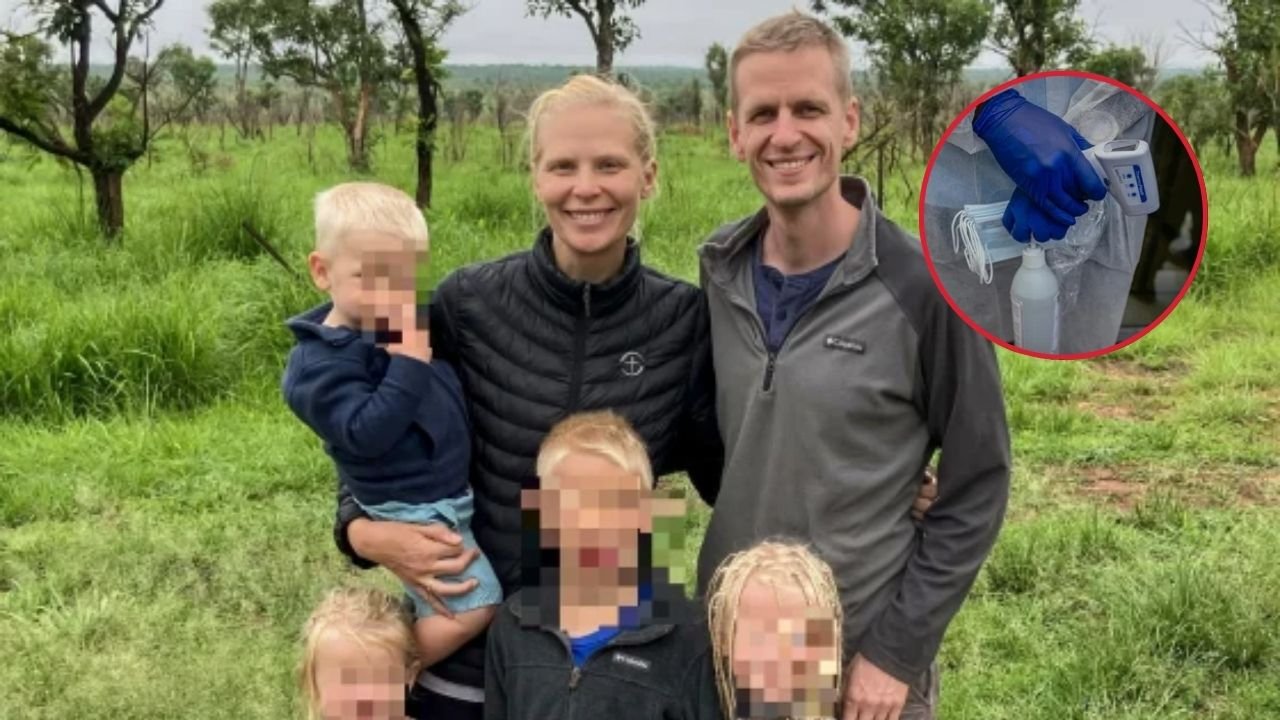
A U.S. doctor infected with Ebola while working in the Democratic Republic of Congo has been transported to Germany for specialized medical treatment, drawing international attention as health authorities race to contain a rapidly expanding outbreak in Central Africa.
The patient, identified as Dr. Peter Stafford, contracted the rare Bundibugyo strain of Ebola while serving as a medical missionary in eastern Congo. His transfer to Berlin highlights both the seriousness of the outbreak and the extensive international coordination required when healthcare workers become infected during humanitarian missions.
Stick to the Facts
Add icode.net.au as a Preferred Source on Google to see more of our stories in your search results.

As doctors monitor Stafford’s condition, global health agencies continue working to prevent the virus from spreading further across the region.
A Medical Mission Turns Into a Medical Emergency
Before becoming a patient himself, Dr. Peter Stafford was helping provide medical care in one of the world’s most challenging healthcare environments.
Stafford has been working at Nyankunde Hospital in eastern Congo through the Christian mission organization Serge. According to reports, he was exposed to the Ebola virus while treating a patient whose infection had not yet been identified. The exposure occurred before health officials officially confirmed the outbreak in the area.
What initially appeared to be a routine medical case later became linked to Ebola, exposing healthcare workers who had cared for the patient.
Within days, Stafford began developing symptoms consistent with the disease and subsequently tested positive for the virus.
Emergency Evacuation to Germany
Following confirmation of the diagnosis, international health officials moved quickly to arrange a medical evacuation.
Instead of being transported to the United States, Stafford was flown to Berlin, where he was admitted to Charité University Hospital, one of Europe’s leading infectious disease treatment centers. German officials confirmed they were preparing specialized facilities for his arrival and treatment.
The hospital maintains high-level isolation units specifically designed to manage dangerous infectious diseases, including Ebola.
Health officials cited Germany’s extensive experience treating Ebola patients and its geographic proximity to Central Africa as key factors in the decision. Berlin is significantly closer to Congo than major treatment centers in the United States, allowing for faster transport and earlier medical intervention.
Condition Reported as Stable
Despite the seriousness of Ebola infection, early reports from health authorities have been cautiously encouraging.
The U.S. Centers for Disease Control and Prevention confirmed that Stafford arrived in stable condition. Representatives from Serge also indicated that he was receiving advanced medical care and remained under close observation by infectious disease specialists.
Medical personnel familiar with the evacuation described him as visibly ill and exhausted during transport, but doctors expressed hope that early intervention could improve his chances of recovery.
Ebola can be highly dangerous, but outcomes have improved significantly over the past decade due to advances in supportive care and earlier diagnosis.
Family Also Moved to Germany
The response has extended beyond Stafford himself.
Because Ebola can spread through direct contact with infected bodily fluids, health officials have taken precautions involving individuals who may have been exposed. Stafford’s wife, Dr. Rebekah Stafford, and their four children were transported to Germany and admitted to a specialized monitoring facility.
Authorities have not publicly disclosed whether any family members have developed symptoms.
Instead, they remain under observation while health experts monitor them throughout the virus’s incubation period.
Another physician associated with the same missionary organization has also been placed under observation following potential exposure.
Understanding the Bundibugyo Strain
One reason the current outbreak has generated concern is the specific Ebola variant involved.
Health authorities say the outbreak is linked to Bundibugyo ebolavirus, a relatively rare strain of Ebola. Unlike some other Ebola variants, there are currently no approved vaccines or treatments specifically designed for this strain.
Researchers are working urgently to evaluate experimental vaccines and therapies that may offer protection or treatment benefits.
Several promising candidates are under development, including antibody-based treatments and new vaccine technologies that could potentially be deployed if testing progresses successfully.
Until then, supportive medical care remains the primary treatment approach.
Outbreak Continues to Grow
Stafford’s infection comes as health authorities confront a worsening Ebola outbreak across parts of Central Africa.
The outbreak has already resulted in hundreds of suspected cases and more than one hundred deaths in Congo and neighboring countries. The World Health Organization has classified the situation as a public health emergency of international concern due to the risk of continued spread.
Health experts are particularly concerned because cases have appeared in regions affected by conflict, population displacement, and limited healthcare infrastructure.
Those challenges can make contact tracing, testing, and treatment efforts significantly more difficult.
International Response Intensifies
Governments and health organizations have increased efforts to contain the outbreak.
The CDC has deployed personnel to support monitoring, testing, and outbreak response activities in affected areas. Additional Americans who may have been exposed to the virus have also been relocated to Europe for monitoring and quarantine as a precautionary measure.
Meanwhile, the World Health Organization and Africa CDC have sent medical experts, equipment, and emergency supplies into outbreak zones.
Their goal is to identify cases quickly, isolate infected individuals, and prevent further transmission.
What Happens Next?
For now, attention remains focused on Dr. Peter Stafford’s recovery and the broader effort to control the outbreak.
Doctors in Berlin continue evaluating treatment options while monitoring his condition around the clock. At the same time, public health officials are tracking contacts, expanding treatment facilities, and accelerating research into vaccines and therapies that could help stop the Bundibugyo strain.
Although authorities emphasize that the immediate risk to the United States remains low, the case serves as a reminder of the challenges faced by healthcare workers responding to infectious disease emergencies around the world.