
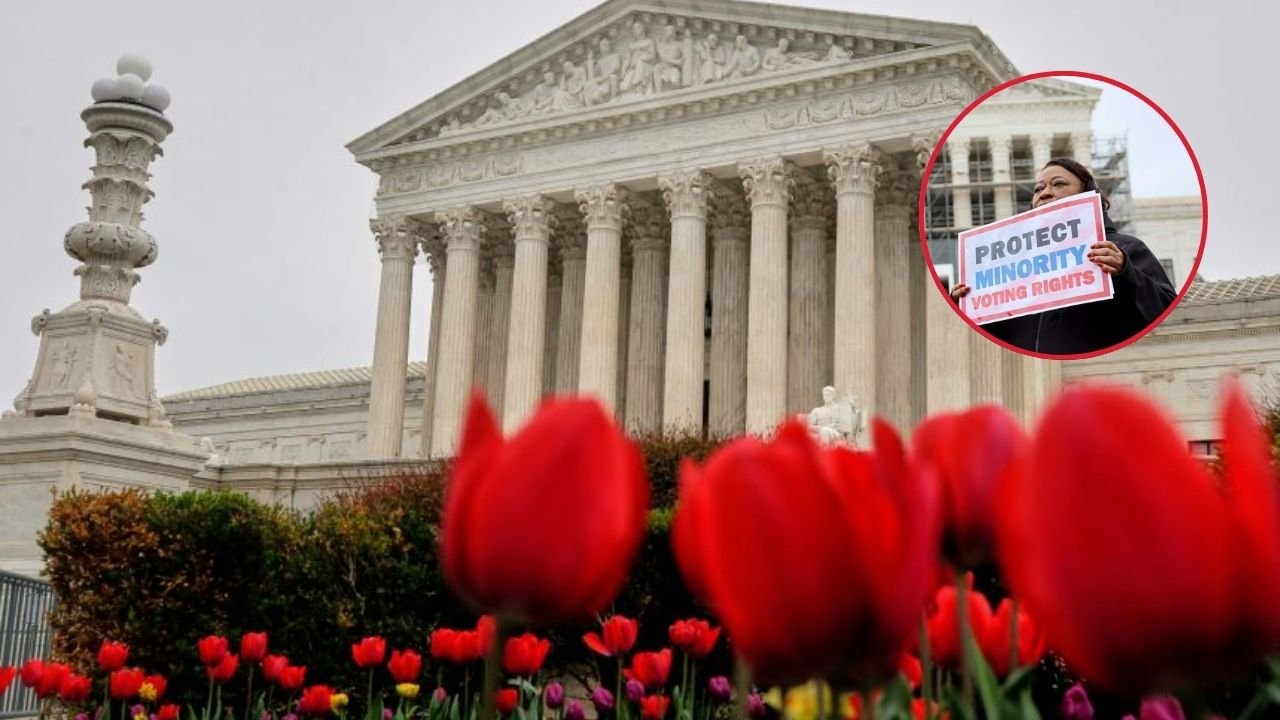
The Voting Rights Act has remained one of the most influential civil rights laws in American history for nearly six decades. Originally signed into law in 1965, the legislation was designed to eliminate racial discrimination in voting practices after years of barriers that prevented many Black Americans and minority communities from fully participating in elections.
Today, enforcement actions connected to the Voting Rights Act continue shaping political battles across the United States. Lawsuits, federal investigations, redistricting disputes, and voter access challenges have intensified in recent years as election laws become increasingly contested ahead of major national races.
Stick to the Facts
Add icode.net.au as a Preferred Source on Google to see more of our stories in your search results.

Supporters of aggressive enforcement argue that federal oversight remains essential to protect equal voting access. Critics, however, say some enforcement efforts have expanded beyond the law’s original purpose and now interfere with state control over elections.
As debates over election integrity and voter access continue growing, the Voting Rights Act once again sits at the center of America’s political and legal landscape.
Why the Voting Rights Act Was Created
The Voting Rights Act was passed during the height of the civil rights movement after decades of discriminatory practices across many states, especially in the South.
Although Black Americans technically gained voting rights after the Civil War through the Fifteenth Amendment, many local governments later used literacy tests, poll taxes, intimidation, and complicated registration systems to suppress minority voting participation.
Civil rights activists spent years documenting these practices through protests, legal challenges, and public campaigns. Violent incidents involving peaceful demonstrators helped increase national pressure for stronger federal protections.
In 1965, President Lyndon B. Johnson signed the Voting Rights Act into law, calling it one of the nation’s most important civil rights achievements.
The law gave the federal government new authority to challenge discriminatory election rules and monitor certain states with histories of voter suppression.
Enforcement Actions Have Changed Over Time
Early enforcement efforts focused heavily on eliminating obvious barriers such as literacy tests and racially discriminatory registration systems.
Federal officials sent election observers into some states and required jurisdictions with histories of discrimination to obtain federal approval before changing voting laws. That process became known as “preclearance.”
Over time, however, Voting Rights Act enforcement expanded into more complicated legal areas, including redistricting, language assistance requirements, polling place access, and voter identification laws.
Modern enforcement actions now often involve lengthy courtroom battles over whether election rules unfairly affect minority voters even if discrimination is not openly stated.
That shift has made Voting Rights Act cases more politically and legally complex than in earlier decades.
Supreme Court Decisions Reshaped Enforcement Power
Several major Supreme Court rulings significantly changed how the Voting Rights Act is enforced.
One of the most important decisions came in 2013 with Shelby County v. Holder. In that ruling, the Supreme Court struck down part of the formula used to determine which states required federal preclearance before changing election laws.
The decision dramatically reduced federal oversight powers that had existed for decades.
Supporters of the ruling argued that conditions in the country had changed since the 1960s and that some states should no longer face extraordinary federal supervision based on outdated historical data.
Critics warned the decision would weaken protections against voter suppression and lead to stricter election laws targeting minority communities.
Since then, lawsuits connected to voting access have increased across multiple states.
Redistricting Battles Became a Major Focus
One of the biggest modern enforcement issues involves political redistricting.
Every ten years, states redraw congressional and legislative district maps after the national census. Those maps often determine political representation for the next decade.
Voting rights groups frequently challenge maps they believe dilute minority voting power by either dividing communities across multiple districts or concentrating voters into limited areas.
Several recent federal cases focused on whether states properly created districts that allow minority voters a fair opportunity to elect candidates of their choice.
These lawsuits have become especially significant because control of Congress and state legislatures can depend heavily on district boundaries.
In many cases, courts have ordered states to redraw maps before elections move forward.
Voter Identification Laws Spark Continued Debate
Another major area of Voting Rights Act enforcement involves voter identification requirements.
Supporters of voter ID laws argue they help protect election integrity and public confidence by verifying voter identity. They say identification requirements are common in many everyday activities and should not be controversial in elections.
Opponents argue some ID laws disproportionately affect minority voters, elderly citizens, low-income communities, and rural populations that may face greater difficulty obtaining acceptable identification.
Federal lawsuits in several states have challenged whether these laws violate protections guaranteed under the Voting Rights Act.
Courts have sometimes reached different conclusions depending on the details of each state’s election system.
Language Access Enforcement Expanded
The Voting Rights Act also includes provisions requiring language assistance for certain communities.
In areas with significant populations of voters who primarily speak languages other than English, election officials may be required to provide translated ballots, bilingual poll workers, and voting materials in multiple languages.
Federal enforcement actions involving language access have increased in diverse states and counties where demographic changes rapidly expanded multilingual communities.
Advocates argue these protections are essential to ensuring all eligible citizens can fully participate in elections regardless of language barriers.
Critics sometimes argue the requirements create administrative burdens for local election offices already struggling with staffing and funding challenges.
Election Tensions Increased Public Attention
The intense political climate surrounding recent national elections has dramatically increased attention on voting rights enforcement actions.
Both major political parties now frame election law debates as central to democracy itself, though they often describe the threats differently.
Some leaders focus heavily on preventing voter fraud and strengthening election security. Others prioritize expanding voter access and combating what they view as suppression efforts.
As a result, nearly every major election law change now faces potential legal scrutiny and national political attention.
Federal courts continue handling numerous cases involving absentee ballots, voter registration rules, polling place changes, and district maps.
The Future of Voting Rights Enforcement Remains Uncertain
The future of Voting Rights Act enforcement remains one of the most closely watched legal and political issues in the United States.
Civil rights organizations continue pushing for stronger federal protections and possible congressional action to restore parts of the law weakened by court rulings. Meanwhile, opponents argue election administration should remain primarily under state control.
With major elections approaching, enforcement actions connected to voting access will likely continue shaping political debates nationwide.
Nearly sixty years after its passage, the Voting Rights Act remains not only a historic civil rights law but also one of the most powerful and contested legal tools influencing American democracy today.